
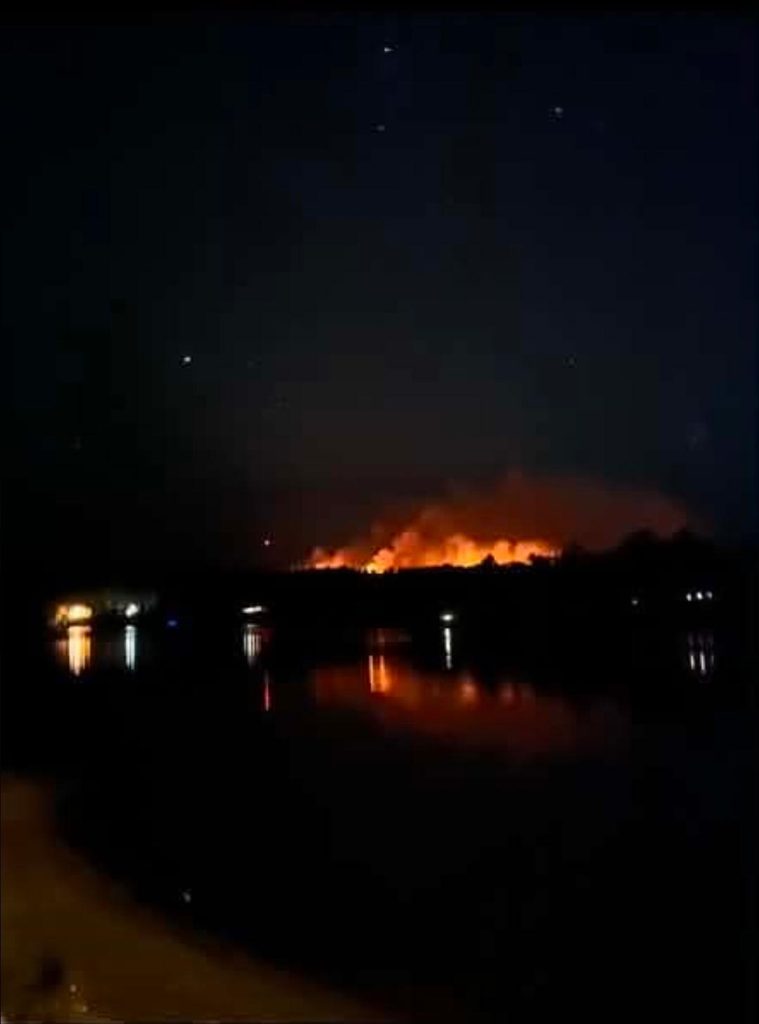
Michigan on Fire
Several MI forest fires are at risk of returning in spring
“Our house is on fire. I am here to say, our house is on fire.”
Greta Thunberg, at the World Economic Forum
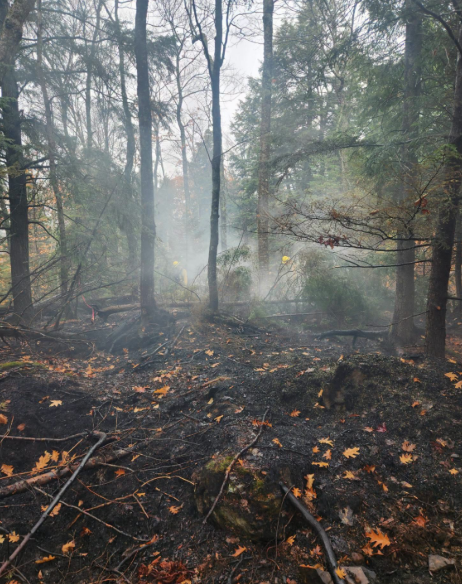
Photo from Michigan DNR FaceBook page.
On Oct. 9 an airplane flying near Marquette, MI saw something unexpected. Beneath, the world was ablaze, smoke curling over treetops as the ground below became encompassed by fire. Michigan is no stranger to wildfires. Statistics released by the State of Michigan say that firefighters respond to around 10,000 wildfires in Michigan each year. A wildfire is any free-burning fire that occurs unplanned and is resistant to extinguishing. There are several forest fires currently burning in the Upper Peninsula (U.P.), and they aren’t predicted to go away soon.
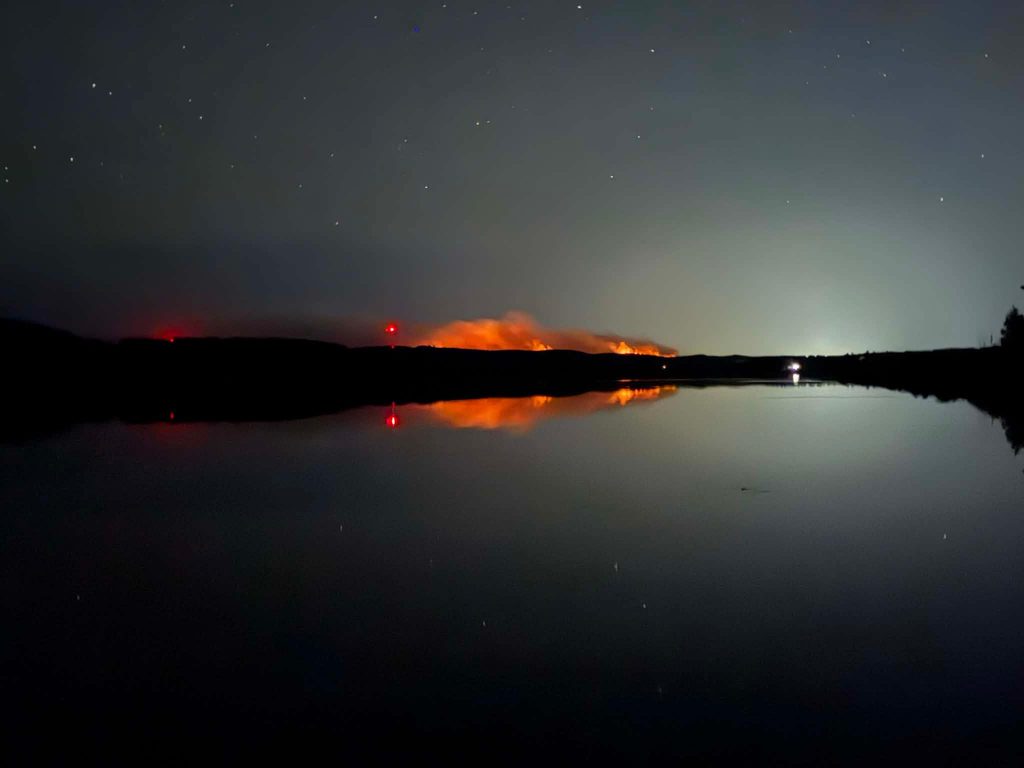
“When we were talking to neighbors, they were saying that they were kind of awestruck because a lot of the leaves and stuff were actually ignited and blowing around,” Jeff Phelps, who lives near Marquette, said.
Two of the three main fires currently leaving a hefty impact, the Black River Fire and the Craig Lake Fire, are confirmed to have been sparked by lightning and are currently being contained. The Ridge Fire, close to the Dead River Basin in Marquette, has only been spreading.
Phelps said that while he and his wife didn’t receive an evacuation warning due to the Ridge Fire, their friends on the north side of the Dead River Basin did. The Michigan Department of Natural Resources (DNR) utilizes the “Ready, Set, Go!” procedure for evacuation.
photo (right) by Jeff Phelps
Click for more: “Ready, Set, Go!” Procedure
The “Ready” stage emphasizes awareness and ensures that citizens are getting updated with information. Once the “Set” stage is enacted, people are expected to have their cars full of essentials, have secured a place to stay and be ready to leave at any given moment. From there, they wait to be given either an all-clear to stay put, or a “Go!”
In an article released by WCMU Public Media, it was stated the Ridge Fire has burned nearly 500 acres of land as of Oct. 30, an immense amount compared to when it started.
“It got kind of crazy,” Phelps said. “I think when we first heard about it, it was about 20 some acres, and they go, ‘Wow, it’s getting big.’ And then [it] just kept going, and then it got up to 460 acres.”
| Fire Name | Size (as of Nov. 4) | Location |
| Black River Fier | 362 acres | South of Wakefield, MI |
| Ridge Fire | 496 acres | Marquette, MI |
| Craig Lake Fire | 606 acres | Craig Lake State Park, MI |
Information from Western Fire Chiefs Association website
Ines Ibanez, a professor of forest ecology at the University of Michigan in the School for Environment and Sustainability, has studied the impacts of forest fires on ecosystems. Ibanez says that when fires rampage an ecosystem, the animals generally have the foresense to evacuate. However, they may find that when they return, their nests, foraged food and even their habitats are gone. This isn’t always a bad thing. When an event occurs, it will temporarily throw off homeostasis, but it also may allow new species to adapt and thrive.
“So what comes after the fire, like the regrowth of vegetation, may provide habitat and also food for many other animals,” Ibanez said. “So animals will again be affected maybe directly, but many of them also adapt themselves to the new environment.”
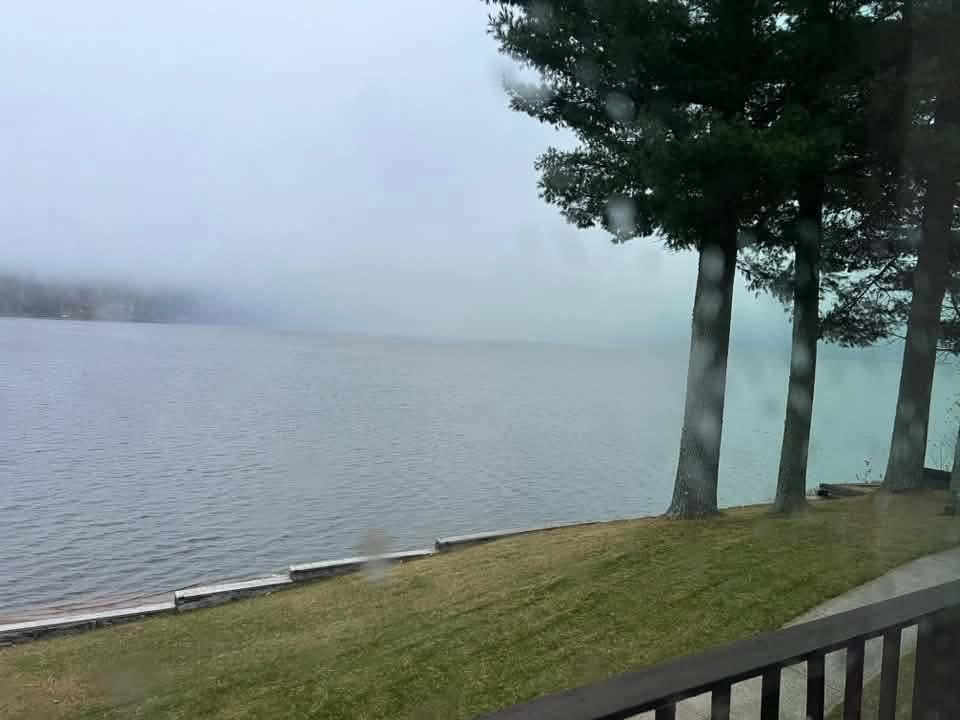
photo by Jeff Phelps
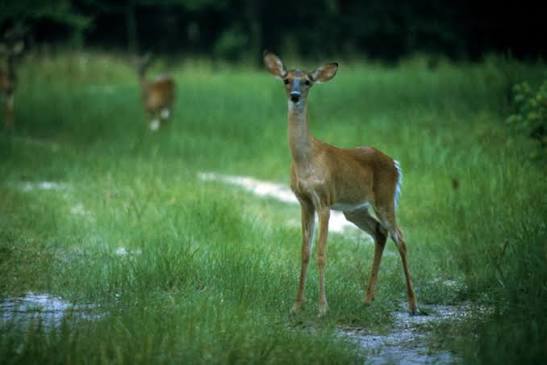
One of these species is deer. The immediate impact after a fire may negatively affect the deer population due to a disruption of their typical habitat and food chain. However, deer eat grass, and wildfires tend to leave grass in their wake. Deer also love aspen trees, which they use for food and shelter. Aspen flourishes and reproduces in abundance after a fire.
The largest concern for these fires, specifically the Ridge Fire, is the possibility of holdover fires, coined “zombie fires.” Zombie fires commonly occur in boreal forests, notably the ones in Alaska. These fires are like tulips, where they’re planted in the fall and come back every spring.
photo from Flickr
Zombie Fires: Read More
When wildfires burn deep enough into dry sediment, they leave behind remnants — like the seeds of a fire. An article by EBSCO Information Services states that these seeds are of extra concern because they can appear at just about any time when conditions are optimal. In the spring, these conditions will encourage the fire seeds to grow into a new fire, hence the term “zombie fire.” This is a phenomenon that isn’t unseen in Michigan but still uncommon. Due to Michigan’s tendency to have rainy springs and snowy winters, fires are usually extinguished naturally before they can burn deeply into the ground.
Contrary to this, Marquette is currently facing a severe drought. WCMU Public Media reported that these fires are burning 2 to 3 feet deep in the dry ground, a catalyst for a fire. Because these fires have started burning down instead of up, previously successful strategies for suppression have become less and less useful. Because of these conditions, the Ridge Fire is at risk of causing one of these zombie fires.
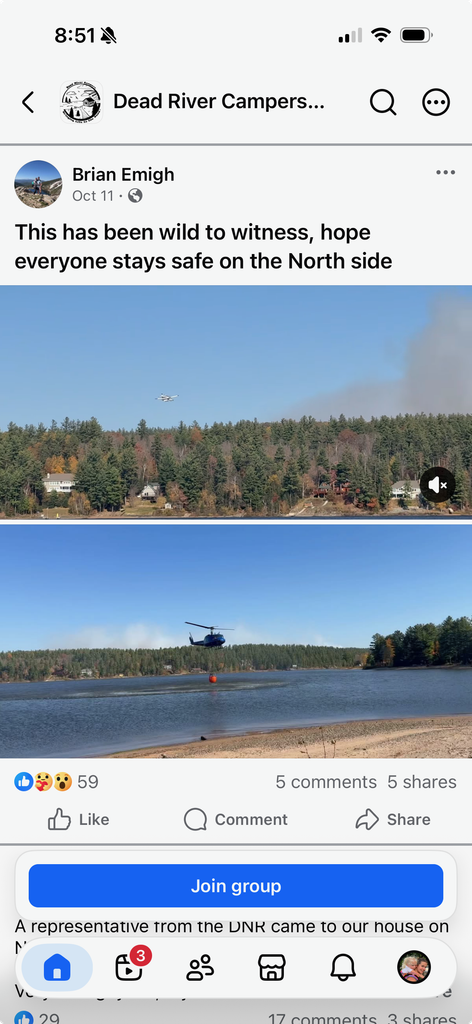
Residents nearby reported seeing planes take water from nearby lakes to pour on top of the fires.
“So it took [the water planes] four minutes to scoop the water [and] dump it on the fire,” Phelps said. “And they had two planes, and they were two minutes apart from each other.”
As the DNR tirelessly fights the fires, citizens are returning back to daily life, though severe fire warnings are in-stated in upper Michigan and the U.P. The Ridge Fire, unlike its counterparts, proceeds to grow and refuse containment, and the DNR has resorted to hoping future rain and snow will suffice.
Wildfires shape ecosystems, but they also interfere with human nature. According to the U.S. Environmental Protection Agency (EPA), smoke, whether long-lasting or just a brief sniff, has been linked to several fatal health conditions and chronic illnesses. The EPA also noted the impact of fire smoke on the ozone layer downwind. The concentration of ozone may be elevated, which causes lung diseases.
“So, [Michigan has] a well water and water [system] that goes on the from the surface to the underground, and the way that we can keep that water moving, filtrating, is through the vegetation,” Ibanez said. “So if you have a large area where all the vegetation has been lost, and what we have is ashes, that’s going to be affecting the filtration rate of water,and the long-term filtration rate.”
Ashes and pollutants from wildfires land in the sediment and run-off carries them into water reservoirs. This becomes an issue as the occurrence of climate change invoked wildfires increases. Smoke particulars accumulate in the respiratory system, ashes accumulate in the winter and deer change habitat, expanding the wildfire far from its initial location.
According to the National Oceanic and Atmospheric Association (NOAA), a study done in 2016 showed that between 1984 and 2015, climate change increased dry organic matter and doubled the number of large fires in the United States.
The U.P. may be at high risk for fires, but so is the rest of Michigan. In fact, the northern parts of Midland up through Cheboygan are marked equal risk as the U.P. on a Wildfire Risk map released by the U.S. Department of Agriculture Forest Service Department. Global warming drives droughts and optimizes wildfire conditions.
